Unlocking hidden capacity: a smarter path to industrial growth
Pembroke Alliance CEO John Daly looks into unlocking hidden capacity for smarter growth

Across manufacturing and construction supply, many businesses are operating under sustained pressure – rising costs, labour constraints and tighter delivery expectations. The instinctive response is often to expand: more space, more people, more equipment.
However, what we are increasingly seeing is that many organisations already have significant untapped capacity within their existing operations.
Unlocking what is already there
We recently partnered with an established manufacturer serving commercial markets. Demand was strong, the team was capable, and the ambition to grow was clear. Yet, like many organisations, they were experiencing operational strain.
Production flow was inconsistent, performance visibility was limited, and existing systems did not fully support how the business needed to operate.
Rather than defaulting to expansion, we worked with the leadership team to step back and ask a more fundamental question: what is preventing the business from performing at its best? That question reframed the entire approach.
Redesigning the operation – together
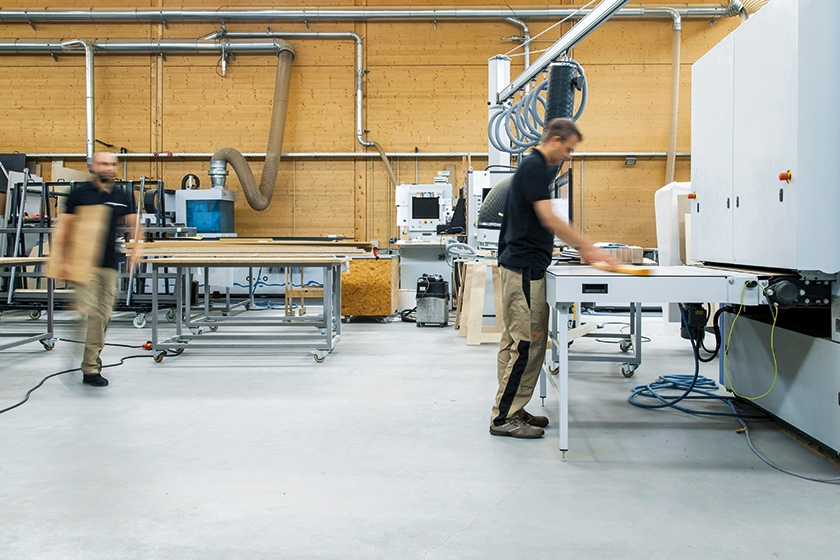
This was not about imposing change, but about working alongside the people who run the operation every day. Time was spent on the shop floor, mapping how work actually moved through the business rather than how it was assumed to move.
By listening closely to the team, we began reshaping the operation in a practical and grounded way. Batch processes were progressively replaced with more continuous flow, layouts were adjusted to reduce unnecessary movement, and workstations were better aligned to the required sequencing of work.
These were not dramatic interventions, but a series of targeted improvements developed with the team. As these changes took hold, it became clear that the primary constraints were not structural – they were operational.
Building momentum through the team
As the programme progressed, ownership shifted. What began as an external initiative became something the internal team actively drove. Supervisors and operators started to identify issues earlier, conversations became more structured, and teams moved from reacting to problems to anticipating them.
This transition – from firefighting to control – created strong and sustainable momentum.
Creating visibility and confidence
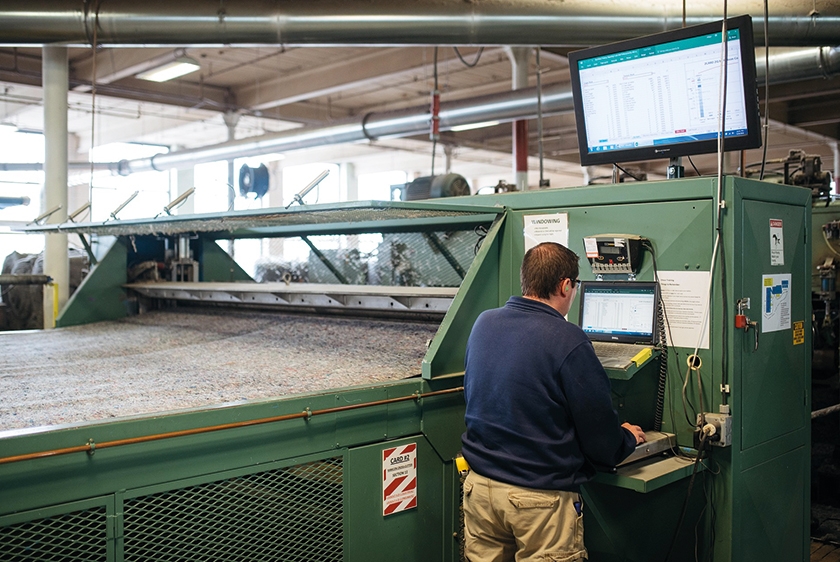
A critical enabler of this shift was improved visibility. Previously, performance was often only understood retrospectively, when opportunities to act had already passed.
Simple, real-time tools were introduced to provide clarity on what was happening, where issues were emerging, and what required attention. This enabled faster, more informed decision-making, reduced disruption and made performance visible and manageable rather than inferred.
Over time, this established a more consistent operational rhythm.
Strengthening the operating platform
Alongside physical and behavioural changes, systems were better aligned across planning, production and reporting. Manual workarounds were reduced, and information flowed more effectively between teams.
The objective was not to introduce complexity, but to create clarity. A business that is easier to run is ultimately easier to grow.
What changed – and why it matters
Within 12 months, the impact was clear. Production capacity increased by 38% without any expansion of footprint. Operating costs reduced by 22 per cent, while on-time delivery improved by 31 per cent. Work-in-progress reduced significantly, releasing both space and working capital, and labour productivity improved across all shifts.
Importantly, these gains were achieved without capital investment in additional facilities, avoiding what would likely have been a multi-million euro expansion. For leadership, this represented a pivotal shift in perspective.
A shift in leadership perspective
The constraint on growth had not been space or scale, but how the operation functioned. By focusing on structured improvement, visibility and better-informed decision-making, the business created something more valuable than additional capacity: a scalable operating platform capable of supporting growth without unnecessary cost or complexity.
Lessons for industrial and construction supply businesses
This experience reflects a broader pattern across the sector. Many organisations underestimate the capacity already embedded within their operations. Before committing to expansion, it is worth asking:
- Are process bottlenecks limiting flow?
- Is layout design restricting productivity?
- Do leadership teams have real-time visibility of performance?
- Are digital systems enabling or constraining decision-making?
- Is work-in-progress tying up cash, space and focus?
- Addressing these questions often reveals significant untapped potential – and a more efficient path to growth.
A smarter path to growth
Operational excellence is not about incremental gains. It is about building a business that performs consistently, adapts quickly and scales with confidence.
For manufacturers, fit-out specialists and construction supply companies, the ability to increase capacity, improve service and strengthen margins – without overextending resources – represents a clear competitive advantage. Achieving this requires more than tools or systems; it requires clarity, structure and the right partnership.
About Pembroke Alliance
Pembroke Alliance works alongside industrial and construction-sector businesses to improve operational performance – from the shop floor to leadership level. Our approach is hands-on, practical and grounded in experience.
We do not simply advise. We work with teams to build capability, embed change and create operations that perform consistently. In our experience, the most effective transformation is delivered with the business, not to it.

+353 (0)86 252 5127
[email protected]
www.pembrokealliance.com