Building connections that build business
Irish Contract Interiors editor John Legg met Paul Whitnell at Business International Trade Alliance’s Maidstone office to find out more.

BITA President Paul Whitnell
Networking organisations are commonplace in business. For decades they have promised introductions, shared knowledge and the elusive advantage of being “in the room” with the right people.
At their best, they do exactly that – bringing professionals together, opening doors and helping relationships develop that eventually lead to business. At their worst, they can feel like little more than subscription clubs, offering polite conversations, exchanged business cards and not much else.
For companies working in construction and the wider interiors supply chain, where reputation and relationships often determine who wins the next project, networking has always been part of the landscape. But as projects become more complex and supply chains increasingly interconnected, there is a growing sense that traditional networking formats no longer quite meet the need.
What many businesses are really looking for now is something more practical – a platform that connects people not just socially but commercially, where shared knowledge, collaboration and opportunity form part of the structure rather than being left to chance.
That is the space BITA – the Business International Trade Alliance – has been steadily occupying over the past decade. Founded in 2012 and now operating across the UK, Ireland and internationally, the organisation positions itself less as a networking club and more as a communication platform linking businesses, sectors and supply chains.
Rethinking the business network
In the aftermath of Ireland’s construction crash in 2008, many businesses retrenched. Paul Whitnell did something different – he started asking questions.
Having relocated to the UK as the downturn took hold, Paul expected the construction market to operate in broadly familiar ways. Instead, he encountered a maze of gatekeepers and transactional networking groups that promised access but delivered little beyond membership invoices.
“I joined various organisations thinking they would help me build relationships,” he recalls. “But very quickly I realised they were happy to take the money without providing real value.”
For Paul, that experience sparked a simple rethink – what should a business network actually do?
The answer became BITA – the Business International Trade Alliance. Originally launched as the British and Irish Trading Alliance, the organisation has grown into a global non-profit network connecting more than 1200 businesses across the UK, Ireland and international markets.
At its heart is a simple idea Paul often uses to describe the organisation –“People who know people that help people.”
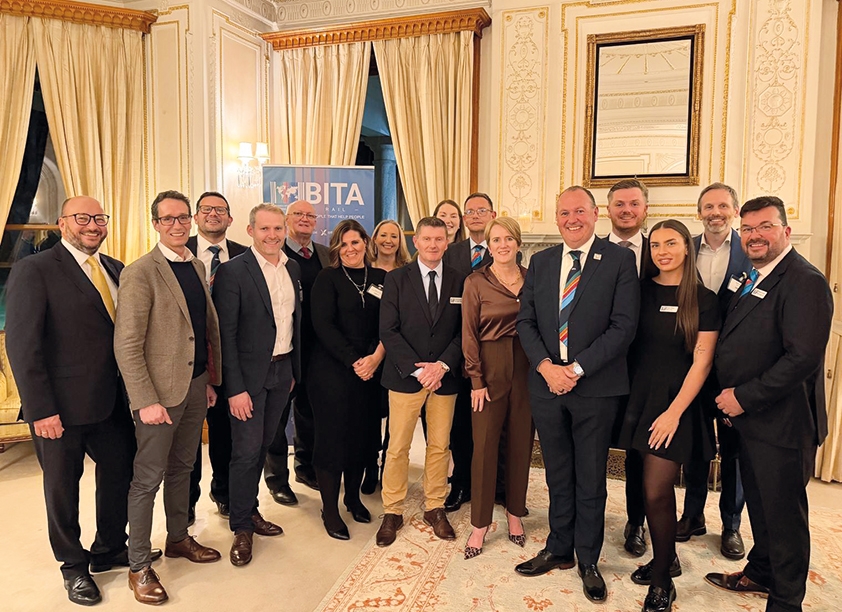
Targeted groups of BITA members share and appreciate a clear focus
A network built on values
BITA’s growth has been steady and deliberate, built around a straightforward principle.
“Business people are looking for honesty and clarity,” Paul says. “They want to work with people who share values – who say what they’ll do and then actually do it.”
Those values – integrity, transparency, generosity of spirit and delivery – underpin the organisation’s structure. Rather than operating as a traditional networking club, BITA functions as a communication platform for business relationships and knowledge sharing.
The network now spans multiple industries, including construction, infrastructure, hospitality and manufacturing. That diversity, Paul argues, is precisely where opportunity emerges.
“Most sectors overlap if you look closely enough,” he explains. “Hotels need to be built. Rail connects people to them. Interiors and fit-out companies finish them. Manufacturing supports the supply chain. Everything crosses over somewhere.”
For companies operating in interiors, joinery and fit-out, that cross-sector perspective is particularly relevant. A project that begins with a developer’s concept quickly becomes a network of contractors, manufacturers, suppliers and specialists.
“Understanding where those connections sit is crucial,” Paul says. “Once you understand the ecosystem, you can create opportunity.”
“Most sectors overlap if you look closely enough.Hotels need to be built. Rail connects people to them. Interiors and fit-out companies finish them. Manufacturing supports the supply chain. Everything crosses over somewhere”
Turning knowledge into opportunity
At the heart of BITA is what Paul describes as a bank of capital knowledge – the collective experience of its members.
Rather than simply exchanging business cards at events, members share insight into markets, procurement processes, regulatory barriers and emerging opportunities.
The approach is structured through what BITA calls five pathways – the framework applied when companies join the organisation.
The first is cost, examining operational spending and identifying where relationships within the network might create efficiencies.
Next comes brand, clarifying exactly what a business does and where it operates so other members understand how to work with it.
The third pathway is relationships, connecting companies with decision-makers – the individuals responsible for commissioning work.
Fourth is resources, providing access to expertise in areas such as finance, management and systems as businesses scale.
Finally there is ESG, encouraging members to collaborate on social and educational initiatives. Through this collective effort, BITA members have supported projects such as building schools and literacy programmes in South Africa.
“It’s the power of the collective,” Paul says. “When businesses come together with shared purpose, you can achieve far more than any one company alone.”
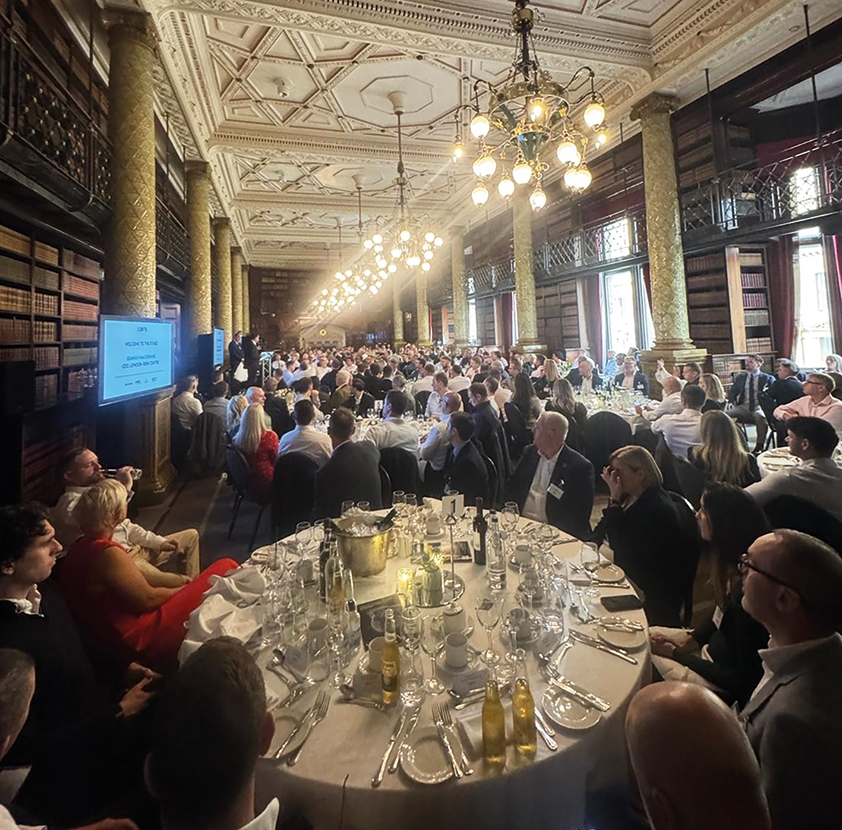
Frequent BITA gatherings create a tremendous networking capability for members
Preparing for the next construction cycle
Paul believes the construction sector is currently sitting on what he describes as a low-level plateau, but he expects activity to increase as regulatory bottlenecks ease and delayed projects return to the pipeline.
That shift, he argues, will expose familiar pressure points – labour shortages, supply chain gaps and cost inflation.
“The industry always faces the same challenge when the market rises,” he says. “Suddenly everyone needs capacity at the same time.”
BITA’s role is to help businesses prepare for that moment in advance by strengthening relationships across the supply chain.
Paul often describes the concept as a sushi bar of opportunity – a rotating visibility of companies, expertise and capacity within the network.
“When the demand comes, you already know where the capability is,” he explains.
For interiors manufacturers and fit-out specialists, that preparation could prove critical.
“If a developer suddenly needs a thousand door sets or specialist joinery, the question becomes simple – who can deliver with certainty?”
“For years we’ve chased the fastest, cheapest option globally – but resilience comes from investing in our own industries. For joinery, furniture and interior fit-out manufacturers, that shift could represent a significant opportunity”
UK-Ireland collaboration
One of BITA’s strongest themes is the opportunity for closer collaboration between UK and Irish businesses, particularly in manufacturing and construction supply.
Ireland has developed strong capabilities in areas such as modular construction, fabrication and specialist joinery. Meanwhile the UK market continues to require scale and supply resilience for major development pipelines.
“There’s resource sitting on our doorstep,” Paul says. “The relationship between Britain and Ireland has huge potential if businesses are prepared to engage with it.”
He also believes the sector must rediscover confidence in local manufacturing.
“For years we’ve chased the fastest, cheapest option globally,” he says. “But resilience comes from investing in our own industries.”
For joinery, furniture and interior fit-out manufacturers, that shift could represent a significant opportunity.
From networking to real collaboration
Paul emphasises that the network’s purpose is not simply introductions, but practical collaboration.
A typical example might involve two companies with complementary capabilities – for instance, a door manufacturer and a joinery specialist – combining resources to offer a complete solution to a developer.
“Together they can say we have the full package, and we have the capacity,” he says.
In a sector where reliability and scale increasingly matter, that collaborative model can often be more valuable than competing individually.
“Too many people try to do business in isolation … but when you build a community around trust and shared knowledge, the results speak for themselves”
A growing international footprint
While the UK and Ireland remain BITA’s core, the organisation is steadily expanding internationally. The network now has representation in regions including the United States, the Middle East and Australia, with local chapter leadership ensuring that each market retains its own commercial understanding and relationships.
Despite that growth, Paul insists the organisation remains rooted in the principles that inspired its creation.
“Markets change, industries change,” he says. “But the fundamentals don’t. Business is about trust, relationships and delivery.”

Building the right culture
If there is one theme Paul returns to repeatedly, it is culture.
BITA’s continued expansion, he believes, depends on maintaining the integrity of its values and ensuring that members contribute actively rather than passively.
“It only works when people participate,” he says. “If you bring the right people together for the right reasons, the opportunities follow naturally.”
For Paul, the organisation’s success is ultimately proof that a different approach to networking is possible.
“Too many people try to do business in isolation,” he says. “But when you build a community around trust and shared knowledge, the results speak for themselves.”
In that sense, BITA reflects a wider shift in how business relationships are evolving. Traditional networking still has its place, but increasingly companies are looking for something more joined up – where introductions lead to collaboration, and collaboration leads to real opportunity.
For Paul, that is precisely the point. “Business is still about people,” he says. “Always has been.”