Five things we’re seeing everywhere in Irish commercial interiors right now
Across Ireland’s commercial interiors sector, change is being shaped as much by how spaces are made as how they look. Drawing on recent projects featured in Irish Contract Interiors, this overview highlights five key shifts – alongside the realities influencing how they are delivered.
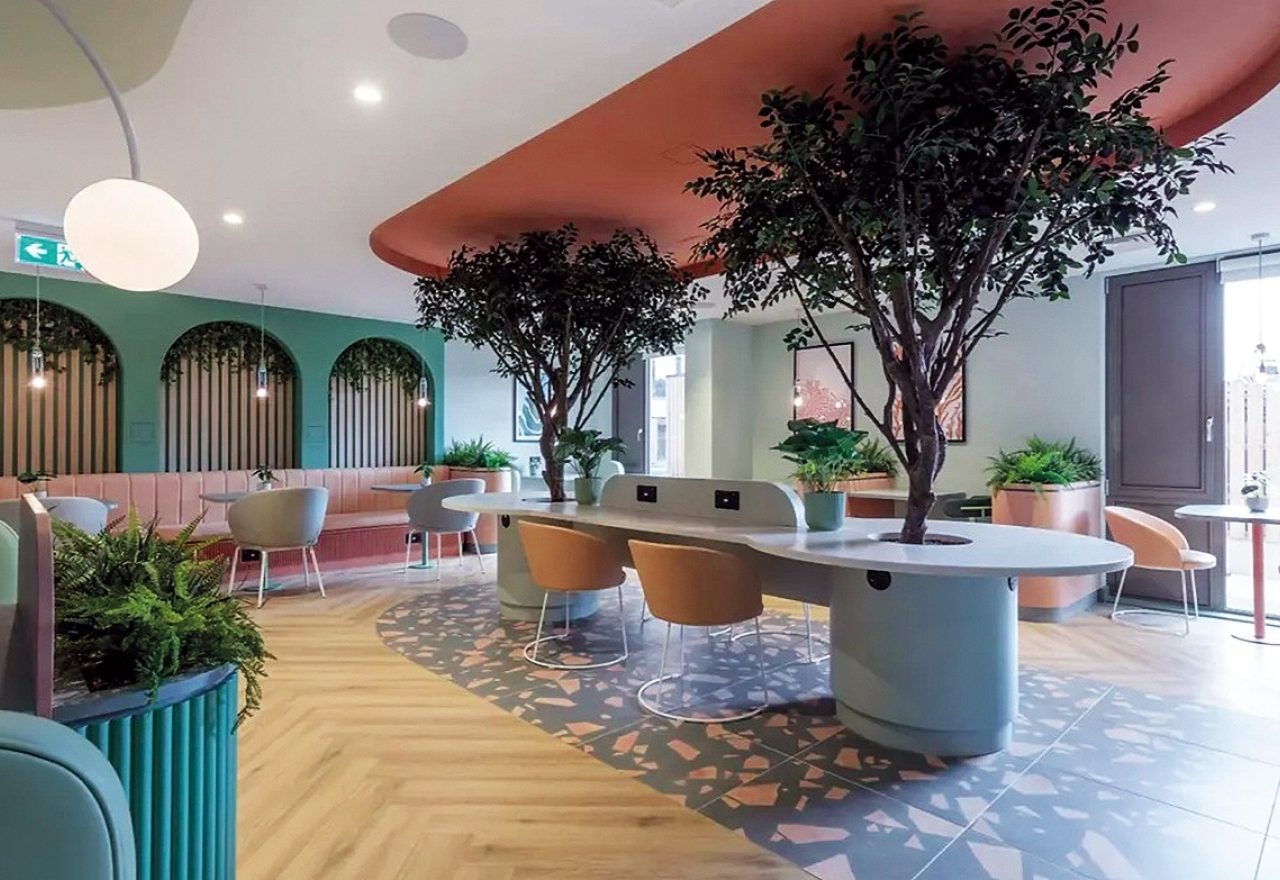
Yugo Bottleworks by Farrell Furniture: Refined student living in Cork – clean lines, premium finishes, and sleek, space-smart interiors with a contemporary edge
Softer zoning, not hard divides
Open-plan hasn’t disappeared – but it has evolved. Instead of fixed partitions, designers are working with furniture, joinery and planting to create more fluid spatial definitions that can adapt over time.
This shift is evident across recent workplace and hospitality projects featured in Irish Contract Interiors. At Forde’s Courtyard, delivered by Clohane Wood Products, the internal layout was reworked to better support how the space would be used.
Joinery plays a key role here – not as enclosure, but as a spatial tool. Bespoke booth dividers, bar elements and wall cladding are used to subtly define zones without interrupting continuity.
“The space was opened up to improve flow and create a more flexible layout for users.”– Project team, Clohane Wood Products, Forde’s Courtyard
Residential lighting in commercial settings
Lighting continues to shift away from uniformity towards atmosphere. Layered schemes – combining pendants, wall lights and concealed lighting – are becoming standard across offices, hotels and public spaces.
This is particularly evident in hospitality-led environments such as The Hoxton Dublin, where lighting is used to create variation and mood across different zones. The project combines bespoke pendants, concealed LED detailing and decorative fixtures to highlight architectural features.
“Lighting is used to highlight original features and create atmosphere throughout the space.”
– Design team, The Hoxton Dublin project, as featured in Irish Contract Interiors
This approach works alongside furniture and finishes – often delivered by manufacturers such as Farrell Furniture – to create a more domestic, layered environment.
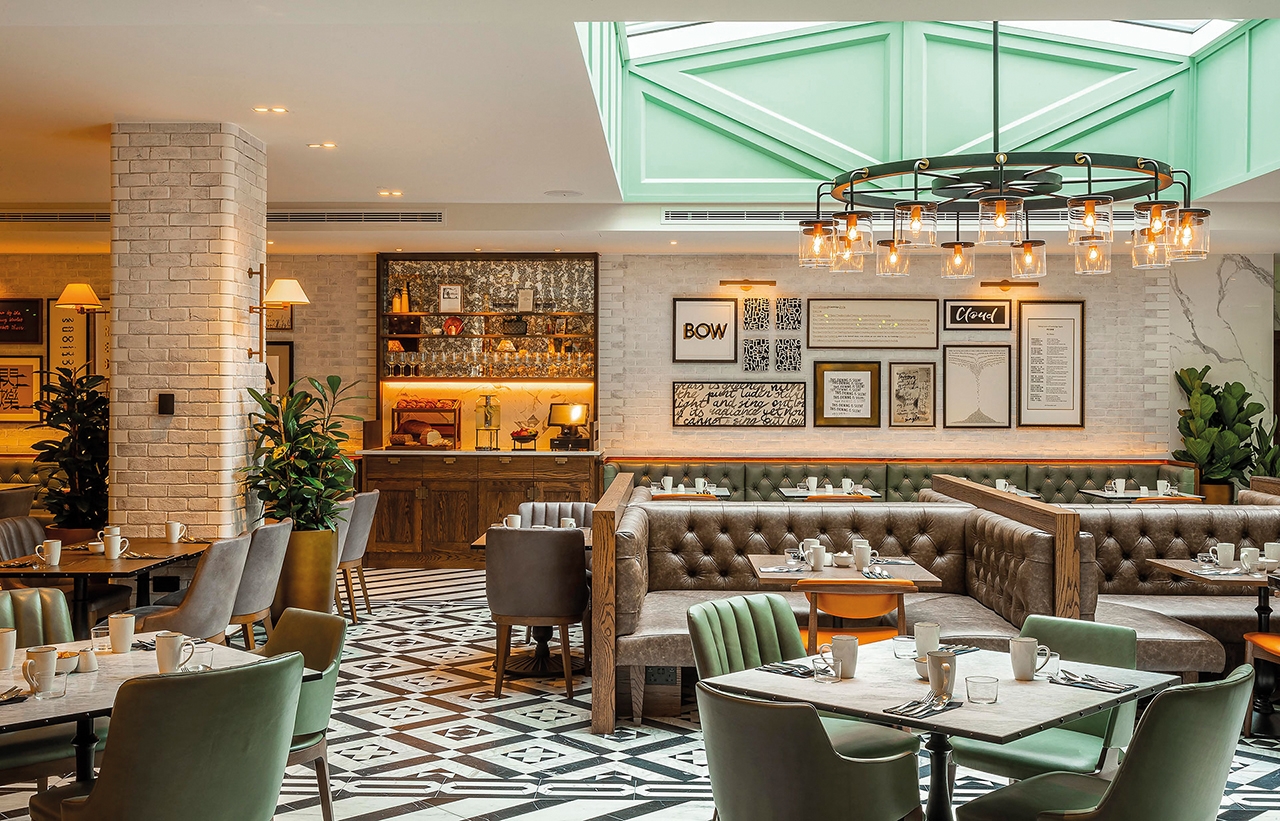
The Fellows House Cambridge, Curio Collection by Hilton by Byrne Custom Joinery: Luxurious hotel interiors – bespoke detailing, rich textures, and refined finishes create an elegant, immersive guest experience
Biophilic design, more deeply embedded
Biophilic design has matured beyond surface-level greenery. Across Irish projects, there is a stronger focus on integrating natural materials – particularly timber – alongside daylight and spatial connection to the outdoors.
At Portrush Adelphi, interiors draw directly on the surrounding landscape, referencing local heritage and natural textures. Similarly, projects like The Hoxton Dublin integrate natural oak, lime plaster and stone elements to create continuity between old and new.
“The design draws on local materials and context to create a strong sense of place.” – Project team, Portrush Adelphi, as featured in Irish Contract Interiors
Material suppliers such as Medite Smartply and manufacturers including Glennwood and Geraghty Joinery Ltd are central to delivering these material-led schemes.
Flex-first furniture and joinery
Flexibility is now a baseline requirement – not just in loose furniture, but in fitted elements. Modular joinery, adaptable layouts and multi-use spaces are being designed in from the outset.
This is clearly visible in CitizenM Dublin St Patrick’s, where public areas are conceived as open, multi-functional environments supporting work, relaxation and social use.
“The Living Room is designed as a flexible space for working, meeting and relaxing.” – Project team, CitizenM Dublin St Patrick’s, as featured in Irish Contract Interiors
At iQ Signal Place, delivered with Farrell Furniture, interiors balance communal and private areas to support modern living patterns.
“The scheme balances sociable communal areas with more private, comfortable spaces.” – Project team, iQ Signal Place x Farrell Furniture
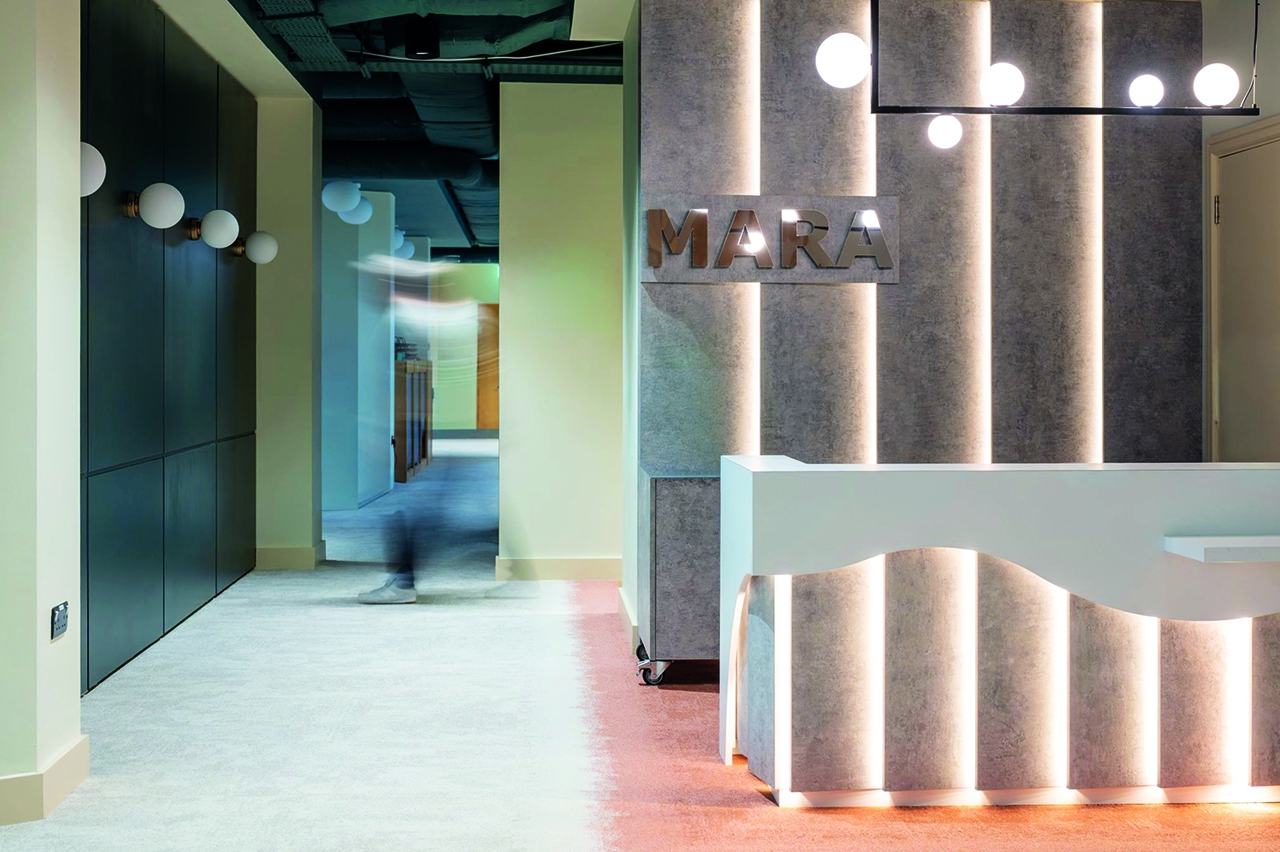
Monaco Toms by DFL Fitouts & Joinery: Striking hospitality design – bespoke joinery, rich textures, and elegant detailing define Monaco Toms’ bold, polished aesthetic
Acoustic comfort as a visible layer
As open environments persist, acoustic control has become more prominent – and more expressive. Timber slatting, upholstered surfaces and ceiling treatments are now part of the visual language of a space.
At The Hoxton Dublin, acoustic performance is integrated into spaces such as the Groundwork venue, using ceiling treatments and material layering to support both live and social use.
“Acoustic performance was considered as part of the overall design approach to support different uses of the space.” – Project team, The Hoxton Dublin.
Specialists such as Woodfit, alongside suppliers like Carnehill and Castlebrook, support this integration of performance and design.
Sustainability: the reality gap in Irish interiors
The spec vs the supply chain
Sustainability is firmly embedded in project briefs across Ireland, but delivery remains shaped by real-world constraints.
At Forde’s Courtyard, delivered by Clohane Wood Products, significant structural and repair works had to be addressed before fit-out could begin – demonstrating how sustainability often begins with stabilising and reusing existing buildings.
“The project required substantial remedial works before the interior fit-out could proceed.” – Project team, Clohane Wood Products
This reflects a broader reality: sustainable outcomes depend on aligning design ambition with building condition and supply chain capability.
Adaptive reuse as a driver
Some of the strongest sustainability outcomes are emerging through adaptive reuse. The Hoxton Dublin demonstrates how historic structures can be retained and carefully adapted.
“Original building elements were restored and integrated into the new design.” – Project team, The Hoxton Dublin, as featured in Irish Contract Interiors
Similarly, CitizenM Dublin St Patrick’s reinterprets an existing structure, combining architectural heritage with contemporary interiors. This approach reduces embodied carbon while maintaining cultural continuity.
Material honesty and local sourcing
Across projects, there is a growing emphasis on materials that are both authentic and locally grounded.
At Forde’s Courtyard, reclaimed timber and locally manufactured joinery were central to the scheme. “Reclaimed materials and locally crafted elements were key to the project’s identity.” – Project team, Clohane Wood Products
Projects such as The Hoxton Dublin also incorporate locally sourced materials and artisan input where possible.
Suppliers including Western Postform, N.A.A and Kleiberit play a supporting role in enabling these material strategies.
Designing for longevity
Perhaps the most consistent theme across recent ICI projects is durability. Whether in hospitality or residential settings, interiors are increasingly designed to age well and adapt over time.
At iQ Signal Place, furniture supplied by Farrell Furniture is designed for long-term use in high-occupancy environments. “Durability and long-term performance were key considerations in the specification.” – Project team, iQ Signal Place x Farrell Furniture
At CitizenM Dublin St Patrick’s, compact, highly specified rooms maximise efficiency while maintaining quality.
The shift ahead
What emerges from these projects is a more grounded view of sustainability. It is less about headline gestures and more about:
- working with existing buildings
- aligning design with fabrication
- selecting materials with longevity in mind
Across the projects featured in Irish Contract Interiors, sustainability is not always visible – but it is increasingly embedded.
And in many cases, that quieter approach may prove to be the most effective.