Advanced tech driving higher-quality commercial interiors manufacturing
Precision machinery and tooling drive competitiveness across Ireland’s evolving joinery manufacturing sector
As project timelines compress and design expectations rise, the quality of Ireland’s commercial interiors is increasingly determined long before materials reach site. Today’s hotels, offices and public spaces depend not only on design and installation, but on the manufacturing capability that sits upstream in the supply chain.
Few companies sit closer to this shift than Diamond Tools Ireland, whose machinery, tooling and technical expertise support many of the workshops responsible for producing the components that ultimately define finished interior environments.
For joinery manufacturers and component producers, accuracy, repeatability and speed are now decisive competitive factors. Advanced machinery and precision tooling have become central to competitiveness, placing specialist technology partners such as Diamond Tools Ireland in a strategic position within the fit-out supply chain. Operating at the intersection of manufacturing and interiors, the company increasingly underpins the production standards being achieved across commercial projects nationwide.
What is changing is not simply the scale of production, but its complexity. Manufacturers are being asked to deliver shorter runs, greater levels of customisation and tighter tolerances, often within the same production cycle. This shift towards flexible, high-mix manufacturing is redefining what modern workshops require from both machinery and tooling – and raising the strategic importance of partners who can support that transition.
Manufacturing capability as a competitive advantage
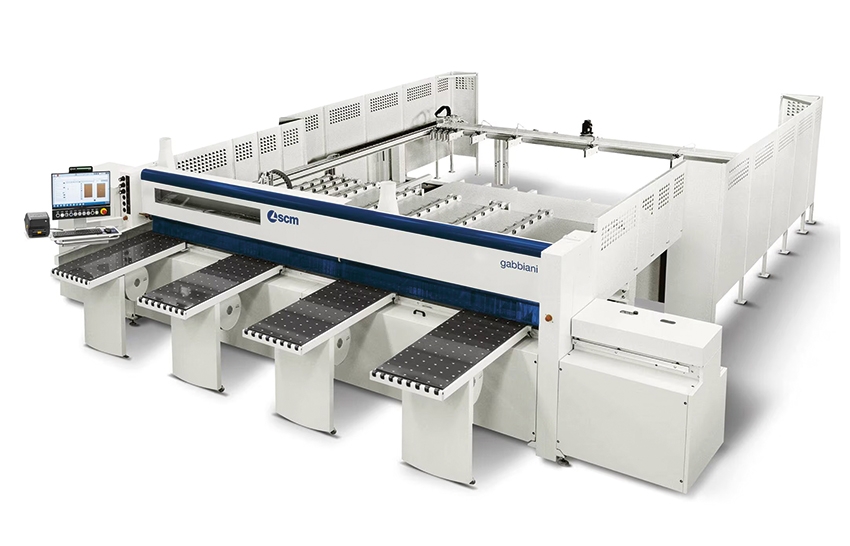
As the main distributor of SCM woodworking machinery in Ireland, Diamond Tools Ireland plays a central role in the modernisation of the country’s joinery and interiors manufacturing base. SCM equipment is widely regarded for its engineering quality and production reliability, with platforms ranging from CNC machining centres capable of automating complex profiling and drilling, to beam saws, edge banders and wide belt sanders that streamline high-volume panel processing and finishing.
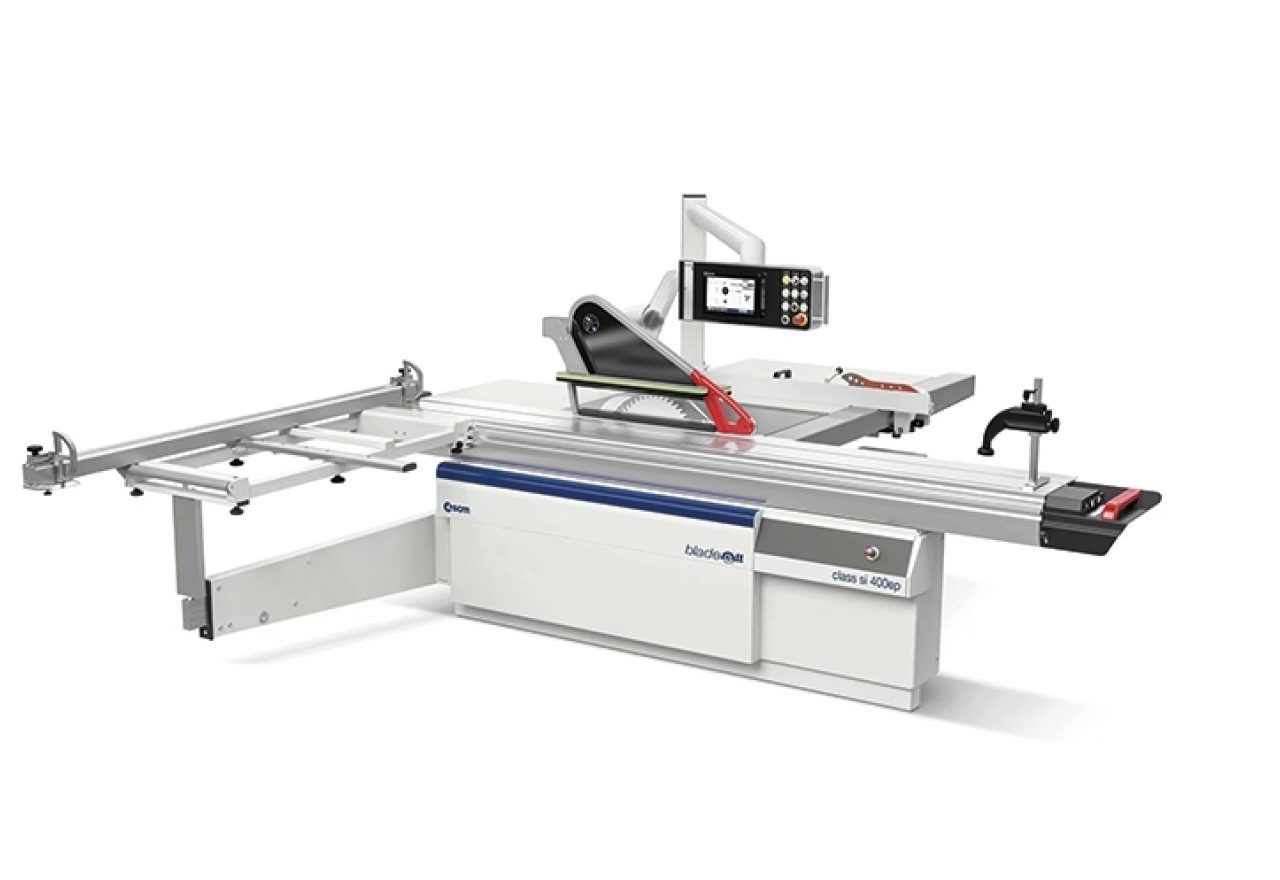
Recent developments within the SCM portfolio further reinforce this focus on performance, flexibility and operator safety. One of the most significant is SCM’s Blade Off safety system, now available on machines such as the Class si 400ep Blade Off sliding table saw. Unlike traditional passive guarding, Blade Off uses intelligent sensors to recognise the presence of the human body and automatically retracts and stops the blade in a matter of milliseconds, before contact can occur. The system is designed to operate reliably across different working conditions, materials and operator movements, and can be rapidly reset without compromising machine accuracy or productivity.
This approach reflects a wider industry shift in which safety is increasingly integrated into machine intelligence, rather than treated as a secondary consideration. For manufacturers operating high-throughput environments with multiple operators, systems such as Blade Off represent a meaningful step forward in reducing risk while maintaining productivity and precision.
Alongside Blade Off, SCM’s continued development of flexible CNC platforms is also shaping modern production strategies. The morbidelli x100 nesting CNC machining centre is a clear example of this direction. Designed to support both stand-alone operation and fully automated production cells, the x100 is aimed squarely at manufacturers working across mixed production environments, where batch sizes vary and material types are increasingly diverse.
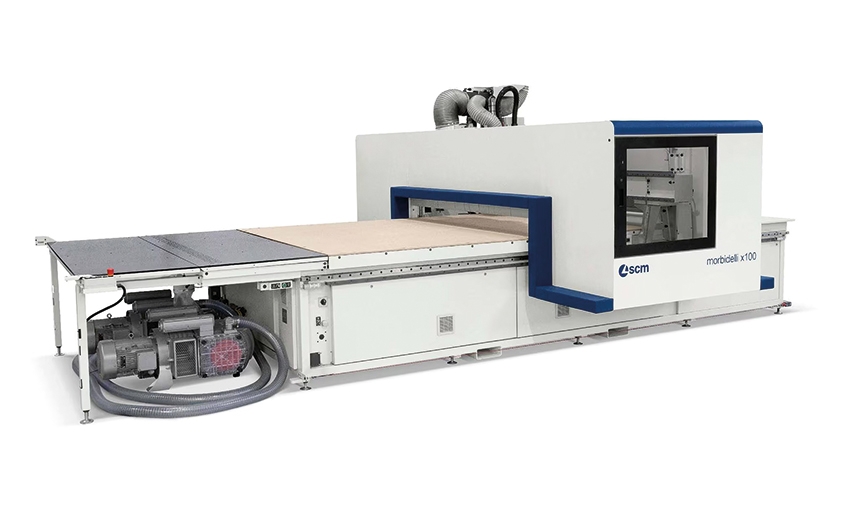
High-speed routing and drilling, advanced vacuum management and modular configuration options allow manufacturers to tailor the platform to their specific production flow. Features such as Smart Cut optimisation, Smart Vacuum technology and the Spoilboard Management System improve part stability, reduce material waste and enhance surface quality. For manufacturers supplying high-spec interior components, where consistency and finish are critical, these capabilities directly support both productivity and quality control.
Crucially, this core SCM platform is reinforced by a complementary portfolio of specialist machinery brands that allows Diamond Tools Ireland to support the full diversity of modern manufacturing models. Vertongen systems are widely used in window, door and cabinet production, combining high-speed CNC processing with precision joinery capability and allowing manufacturers to integrate traditional joinery processes with modern automation.
Salvamac machinery focuses on optimised cutting and material handling, improving throughput and reducing waste on high-volume lines. Houfek sanding and surfacing systems ensure consistent finish quality across large component runs, supporting manufacturers in meeting increasingly demanding surface quality requirements. Omec equipment, long associated with precision milling and dovetailing, continues to play an important role in specialist joinery and drawer production, where traditional craftsmanship is integrated with modern production efficiency.
Together, these relationships allow manufacturers to invest in fully integrated production environments rather than isolated machine purchases. This joined-up approach is increasingly vital as off-site and hybrid construction models expand, requiring workshops to deliver higher output, tighter tolerances and greater consistency across multiple project pipelines.
The quiet impact of cutting technology
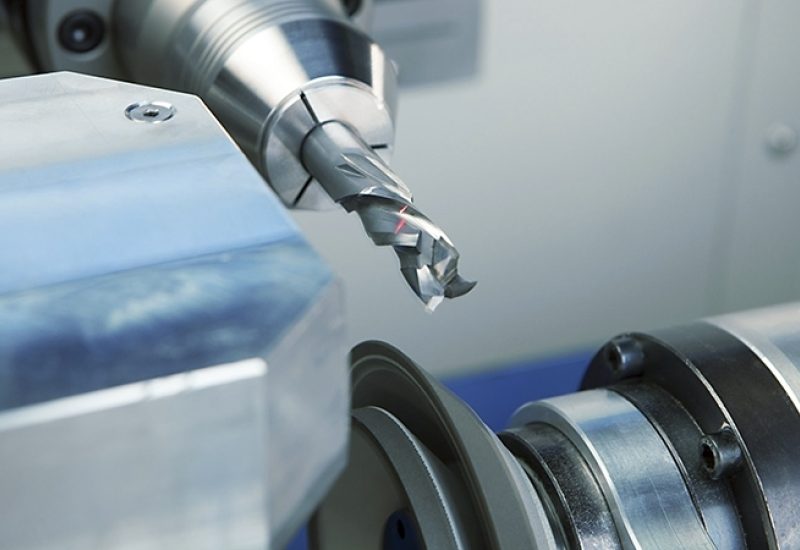
If machinery defines production capacity, cutting technology defines production quality. Over the past decade, advances in tooling have quietly transformed what modern workshops can achieve in terms of surface finish, tool life and process stability. In many cases, tooling performance now plays as significant a role as machine capability in determining production efficiency.
Diamond Tools Ireland works closely with a group of leading international tooling manufacturers whose products are central to this evolution. German-engineered AKE tooling is widely specified for high-performance circular saw blades, hoggers and drilling systems designed to maintain edge quality over extended production cycles. Freud’s extensive range of industrial saw blades and router tooling supports both high-volume panel processing and specialist window and door manufacture, offering manufacturers flexibility across different applications.
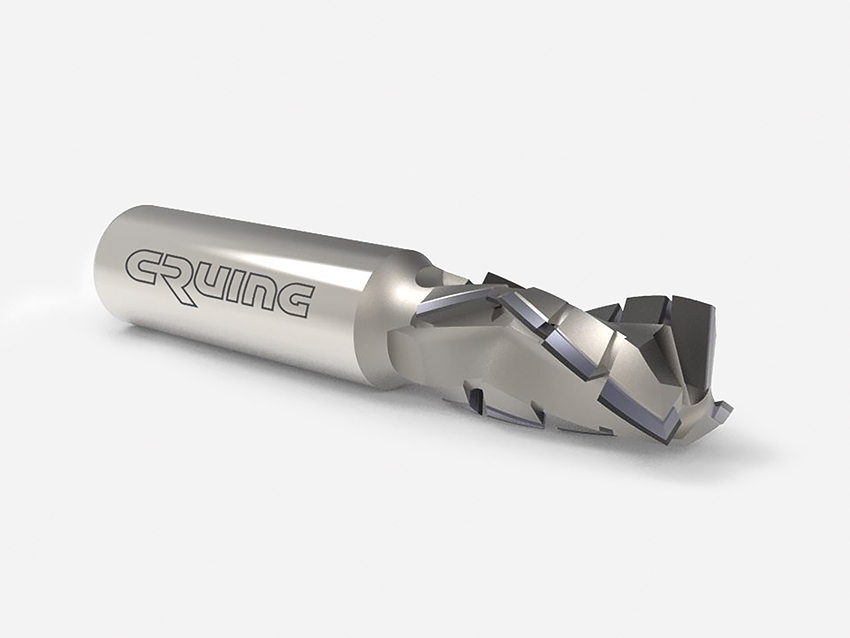
Cruing, in particular, plays a growing role in high-performance woodworking and nesting applications. The company’s extensive portfolio of PCD cutters for nesting, routing, jointing, scoring and sizing enables manufacturers to optimise cutting performance across a wide range of panel-based materials, including MDF, chipboard, laminates and veneered boards. These materials, increasingly common in modern interiors, place significant demands on tooling due to their abrasive properties and finish requirements.
Cruing’s Aerotech system, developed to improve chip evacuation and reduce dust in nesting and routing operations, supports higher feed rates while maintaining cut quality and tool stability. This focus on airflow, chip management and tool geometry allows workshops to sustain productivity without compromising surface finish. In high-volume environments, these incremental gains translate into meaningful improvements in uptime, consistency and overall production efficiency.
Alongside Cruing, TWT and Tigra provide advanced PCD and carbide tooling systems that further enhance cutting stability and extend tool life in abrasive applications. For manufacturers supplying the fit-out sector, where visual consistency and repeatability are critical, these gains are decisive. Reduced tool changes improve machine uptime, cleaner cuts minimise secondary finishing, and predictable performance improves production planning across multi-project programmes.
From supplier to production partner
What increasingly distinguishes Diamond Tools Ireland is the way its machinery and tooling portfolios are combined into a single technical ecosystem. Rather than supplying equipment in isolation, the company supports manufacturers in configuring complete production strategies that align machinery platforms, tooling systems and long-term business objectives.
This systems-led approach reflects the realities of a sector facing rising labour costs, skills shortages and margin pressure. Automation, accuracy and repeatability now define competitiveness as much as craftsmanship. For many manufacturers, investment decisions are no longer about individual machines, but about building scalable, resilient production platforms that can adapt to changing project demands.
As client expectations continue to rise across the commercial interiors market, the alignment between manufacturers and technology partners will only deepen. The future of high-quality fit-out will be shaped not just on site, but in the workshops where today’s interiors are first made — and in the partnerships that enable those workshops to operate at the highest level.